
即时转账,即时拒付——关于Zelle和Cash App退款的神话
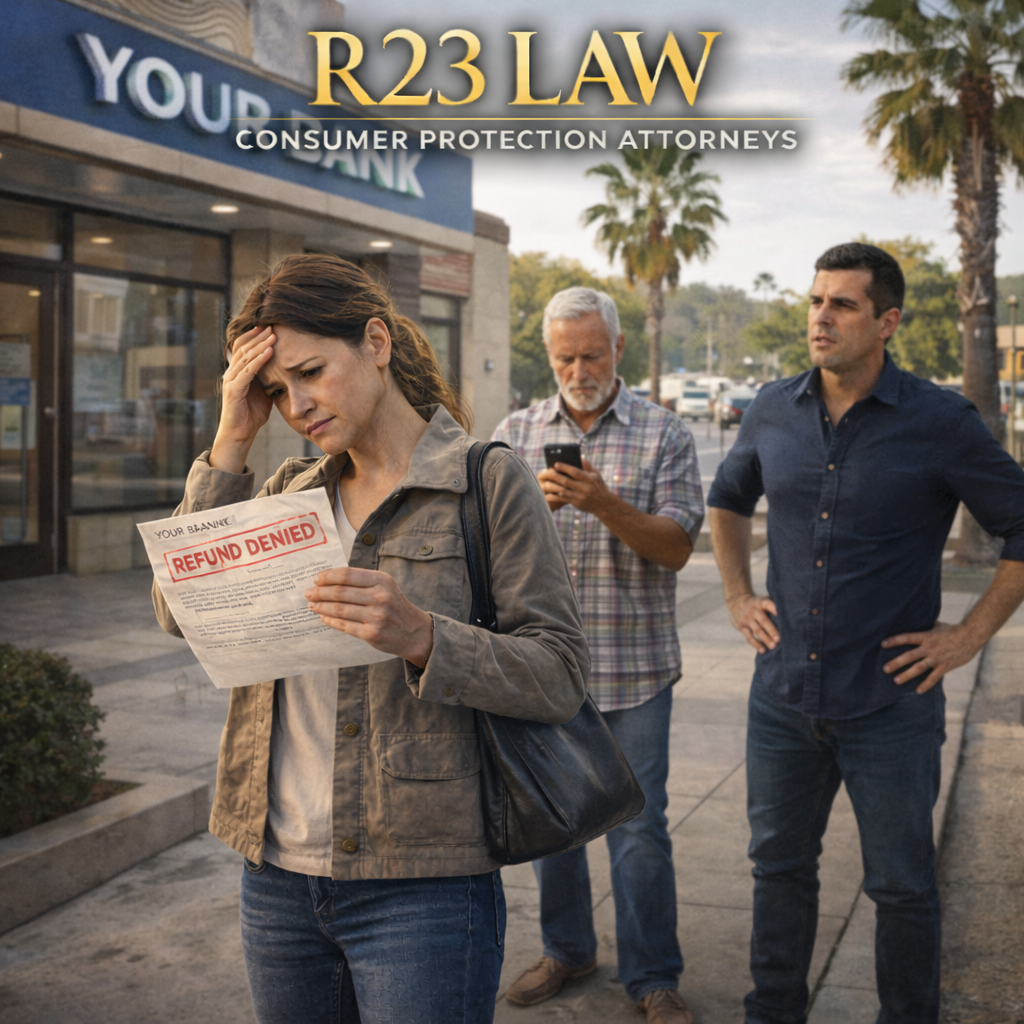
It often starts the same way:
hundreds or thousands of dollars vanish from a checking account through Zelle or Cash App transfers you never authorized. When consumers contact their bank, they are met with a familiar refrain—those payments were instant, irreversible, or “between you and the other person.”
That response is not just misleading. In many cases, it is legally wrong.
As R23 Law’s California Consumer Protection Attorneys regularly see, banks frequently deny valid fraud claims involving peer-to-peer payment apps despite clear obligations under federal law.
What Federal Law Actually Requires
When money is taken directly from a checking account or a linked debit card, the transaction is governed by the Electronic Fund Transfer Act (EFTA) and Regulation E.
Under these laws:
Zelle and Cash App transactions qualify as electronic fund transfers
Transfers made without your authorization are legally unauthorized
Banks must investigate reported fraud
Banks generally have 10 business days to investigate or provisionally credit the account
A denial without real evidence can constitute a legal violation
Bank policies do not override federal law.
Authorized vs. Unauthorized Transfers
Banks often blur this distinction to justify denial.
When a Transfer May Be Considered Authorized
If a consumer personally sent money to a scammer after being tricked, the bank may argue the transaction was authorized under the law.
When a Transfer Is Unauthorized
If a fraudster gained access to an account and moved money without permission—through hacking, impersonation, or account takeover—the transfer is unauthorized. In those cases, the bank may be legally required to refund the money.
This distinction matters, and banks frequently get it wrong.
Why Banks Keep Saying No
Zelle and Cash App are bank-linked systems that move real money instantly. When fraud occurs, reimbursement comes directly out of the bank’s pocket.
Rather than absorb the loss, some banks delay, deny, or hide behind internal “policy” language. But internal policy does not supersede the EFTA.
Speed and convenience are profitable. Refunds are not.
The Importance of Documentation and Timing
After unauthorized transfers, careful documentation becomes critical:
Written disputes identifying the transaction as unauthorized
Transaction IDs and confirmation records
Screenshots and bank correspondence
Copies of denial letters
Federal law imposes investigation timelines. Missing or ignoring those timelines can create liability.
Consumer Protection Laws Still Apply to Payment Apps
Despite how banks frame it, peer-to-peer payment platforms do not eliminate consumer protections. When linked to a bank account or debit card, unauthorized transfers fall squarely under federal law.
R23 Law’s California Consumer Protection Attorneys focus on enforcing those protections when banks refuse to comply.
立即联系R23律师事务所
If a bank denied reimbursement for unauthorized Zelle or Cash App transfers, experienced consumer protection counsel matters.
SoCal: (310) 598-1588
Email: info@R23Law.com
